


Light Work Boots
Jiangxi Saizheng Shoes Co., Ltd. is an independent brand company specializing in the design, production, and marketing of safety shoes, work boots, rubber products, professional clothes, work clothes, and protection clothes. SaizProtex is our independent brand.
The company was established in 2014. It has been focusing on rubber sole safety shoes and occupying the rubber sole safety shoes market with excellent quality. The company strives for development based on credibility and survives based on quality. The company is located in the Longnan City National Industrial Park in Ganzhou, Jiangxi Province, a red Soviet area and the hometown of navel oranges in southern Ganxi.
Our Factory
Jiangxi Saizheng Shoes Co., Ltd. is an independent brand company specializing in the design, production, and marketing of safety shoes, work boots, rubber products, professional clothing, workwear, and protective clothing. SaizProtex is our proprietary brand.
Our Products
Our product range includes the production and sale of safety shoes for foot protection, anti-puncture safety shoes, anti-static safety shoes, electrically insulating safety shoes, as well as shoe materials, clothing, gloves, hardware, safety helmets, safety ropes, safety nets, and masks. We also offer fabrics, textiles, safety nets, sewing machine textiles, leather, mesh cloth, thread, ribbon fabric, hardware plastics, and cowhide.
Product Applications
Our products are used in various industries, including welding, petroleum, machinery manufacturing, petrochemicals, mining, agriculture and animal husbandry, glass processing, electric power, logistics, electronics, pharmaceuticals, and food.
Our Services
Warranty Service: We offer a warranty for our products, ensuring that customers have the right to repair or replace the product within the warranty period.
Technical Support: Our technical team provides support to help customers resolve technical issues during product use.
Customer Care: We regularly communicate with customers to understand their needs and feedback, offering personalized services and support.
-
![Black Light Work Boots]() Black Light Work BootsModel: SZ8339read more
Black Light Work BootsModel: SZ8339read more
Upper: Flyknit Fabric
Toe Cap: Steel Toe
Lining: BK MESH -
![Gray Light Work Boots]() Gray Light Work Boots●Model: SZ8338read more
Gray Light Work Boots●Model: SZ8338read more
●Upper: Flyknit Fabric
●Toe Cap: Steel Toe
●Lining: BK MESH -
![Blue Light Work Boots]() Blue Light Work Boots●Model: SZ8337read more
Blue Light Work Boots●Model: SZ8337read more
●Upper: Flyknit Fabric
●Toe Cap: Steel Toe Cap
●Lining: BK MESH -
![Breathable Safety Shoes]() Breathable Safety Shoes●Model: SZ8336read more
Breathable Safety Shoes●Model: SZ8336read more
●Upper: Flyknit Fabric
●Toe Cap: Steel Toe Cap
●Lining: BK MESH -
![Comfortable Work Boots]() Comfortable Work Boots●Model: SZ8335read more
Comfortable Work Boots●Model: SZ8335read more
●Upper: Flyknit Fabric
●Toe Cap: Steel Toe Cap
●Lining: BK MESH


What is Light Work Boots?
If you wear your work boots all day, lightweight footwear can help minimize foot fatigue and keep you comfortable all day. Opting for lightweight boots that offer advanced cushioning and impact-reducing technologies will help prevent you from feeling every footstep.
Offers a wide selection of work boots for any job, but we’ve designed some of our work boots to be lightweight while keeping your feet protected and comfortable all day. Our lightweight boots keep your steps from being heavy, reducing the amount of impact on your joints and muscles.
Benefits of Light Work Boots
Innovative Comfort and Support
Light work boots provide exceptional comfort and support, reducing foot fatigue and enhancing mobility, crucial for professionals spending long hours on their feet.
Durability and Safety
Despite their lightness, these boots do not compromise on durability or safety, featuring protective elements like steel or composite toe caps and adherence to industry safety standards.
Versatility and Practicality
Suitable for a wide range of work environments, lightweight work boots offer practicality and adaptability, ensuring performance and protection across various professions and conditions. For more insights on how we achieve this balance in our boot making process without compromising quality, check out our blog.
Tips for Trying and Buying
When trying on lightweight work boots, it’s advisable to do so later in the day when your feet are likely to be at their largest. Wear the type of socks you would typically wear at work. Walk around in the boots to ensure there are
Type of Light Work Boots
Steel Toe Work Shoes
The classic steel toe box provides uncompromising protection against heavy impacts. Steel toes are not without their drawbacks, though; they can become overly hot or cold depending on the outside temperature, and their added weight can result in fatigue. Still, the level of protection afforded by steel toe shoes can't be overstated.
Composite Toe Work Shoes
Composite toe caps are made of non-metallic materials like plastic, carbon fiber or kevlar, which makes them a great choice if you have to pass through a metal detector every day for your job. They're about as light as a safety toe can get, which means they're relatively comfortable (albeit not as fortified as steel).
Alloy Toe Work Shoes
Made from a mix of different types of metals, alloy toe boxes can be up to 50% lighter than steel while offering a comparable level of protection. The drawback? They tend to be pricier than their steel counterparts. Still, the reduced weight may be worth the increased cost for some workers.
Soft Toe Work Shoes
For the best in lightweight comfort, you can't go wrong with a soft toe work shoe, especially if your job doesn't require a safety toe. Work shoes are lighter than work boots to begin with, and the lack of a safety toe helps shed additional weight to keep you agile and on the move.
Work Shoe Uppers
Most work boot uppers are made from one or more types of leather. Work shoe uppers, on the other hand, are typically a combination of leather and a synthetic material. These synthetic materials are what make work shoes lightweight, breathable and unique from their work boot counterparts.
Nubuck Leather
The other common type of work shoe leather, nubuck leather is exceptionally waterproof. When used alongside a waterproof synthetic material like nylon, nubuck leather work shoes are a top choice for those who work in wet environments or tend to get caught in the rain on the job.
Nylon
Nylon is a silk-like thermoplastic fabric renowned for its combination of durability and flexibility. These qualities make it a great choice of work shoe material. Nylon is particularly common in athletic-style work shoes. Used in many other types of work apparel and equipment like shirts, pants, gloves and tool bags, nylon is weather-resistant, heat-resistant and very long-lasting.
Mesh
Work shoes tend to feature mesh in their uppers as a remedy to this problem. Synthetic mesh materials are breathable, lightweight and flexible, maximizing environmental comfort while offering the very best in mobility.
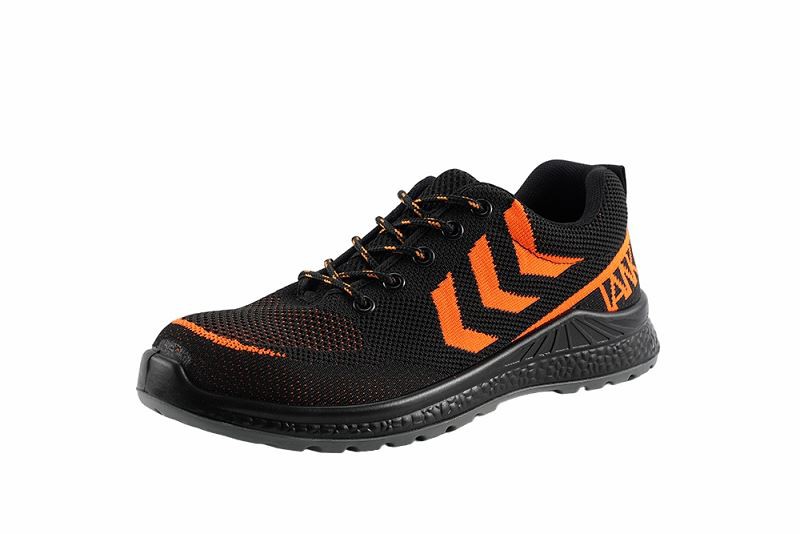

Light Work Boots for Sensitive Feet
Light work boots: every construction worker knows it’s important to stay fully protected during the work day and what a relief it is after coming home from hours of standing up to finally take off those hefty work boots. If you feel like this is your case, you’re definitely in need of some comfortable work boots. Light work boots enlighten your work whilst staying fully protected, without a doubt.
Every vital element in a lightweight work boot, the protective toe, outsole, midsole, upper material, lacing hardware, linings, insoles, .. contributes to the final weight of a work boot. While all of these can be various materials, the weight of a lightweight work boot is usually determined by the toe, midsole and outsole materials.
A composite toe cap is key in order to have a lightweight work boot. requirements. Because composite toe caps are completely metal free, it obviously makes work boots lightweight but also more comfortable in comparison to a steel toe.
Type of Light Work Boots
Work Boots
Rugged, durable, and stylish, work boots are all you need to stay protected and comfy while fulfilling your duties, regardless of the weather. Their design was perfected during the last couple of decades. Work boots protect the feet and lower legs and typically feature a long-lasting lug sole for uneven terrain. Besides that, work boots are also some of the most comfortable boots out there.
Cowboy Boots
Cowboy boots are types of shoes rooted in function. All you need to do is pull them on, wear them hard, and they will last for years. They are anything but casual shoes – the tall shaft and pointed toe make this boot instantly recognizable.
Hiking Boots
Traditional hiking boots feature sturdy soles, lace-to-toe closures, and heel support, meaning this type of boot is as hardworking as it's stylish. They became popular because of their alpine prowess, which they still boast.
Combat Boots
Combat boots, the battle-tested footwear of enlisted military personnel, place functionality above all else, proving that utility triumphs over aesthetics. Also known as "army boots," they offer an impressive combination of protection, grip, and stability. Moreover, they are becoming increasingly popular amongst counterculture groups.
Trench Boots
The trench boot is worn since World War I. Also known as officer or army boots, this type of boot is a stylish staple that's shaken its military roots. Similar to the work boot, the trench boot has a lower profile that's easy to integrate into various wardrobes, making it an amazing boot for various work or weather conditions.
How much do Work Boots With Light Work Boots?
Lightweight work boots generally fall within the range of 2 to 3 pounds. Tactical boots are designed with light profiles, primarily for professionals who require swift and elegant movement.
Boots with alloy toe caps offer a more comfortable and agile experience, catering to the needs of professionals who require mobility and protection in their work environments.
Shoes with lighter uppers are usually made from more lightweight leather and combined with sections of nylon. This combination enhances breathability and keeps the overall boot weight to a minimum. They often come with composite toe caps that prevent easy injuries from heavy objects rolling or falling onto the feet to provide protection.
Tactical boots without safety toes or insulation materials are even lighter, prioritizing ease for quick and efficient responses in critical situations. These boots are designed to be lightweight to support rapid movements without compromising safety.
How to Clean light work boots?
The entire cleaning process can be divided into 3 parts. First off, you’ll have to get off the loose dirt. Then comes the most important part: your light work boots will go through a wet cleaning process.
Remove the Loose Dirt
You can do this with any scrubbing brush you want. You can even use a toothbrush. But a scrubbing brush will help you get the job done faster. Personally, I have this scrub brush set that I use for lots of purposes. You can check it if you want.
Remove the Laces
Once you’re done cleaning out all the dirt from the crevices, you can move on to removing the laces.
Now, some people might disagree with me saying that removing the laces isn’t necessary. But trust me, you’ll be shocked to know how much dirt is actually there.
Once the lace is removed, take care of the tongue. Give both of the tongues a scrub and you’ll be good to go.
Do Some Detailing with an Old Toothbrush
The scrub brush might remove most of the dirt but you need to be extra careful. This results in tiny debris hiding in places like the stitches and crevices.
As a toothbrush is much less abrasive you don’t need to worry about being extra careful. So, get deep into those crevices and bring out all the dirt.
The most important part will be the stitches. Make sure to go through all the stitches with your toothbrush. You’ll be shocked to see how cleaner those stitches will look.
Start Cleaning with Saddle Soap
This step has two parts in it. First off, you’ll have to clean the outsole of your Red light work boots. Now, Red light work boots come in various colors of outsoles. If it’s a lighter shade or white, you’ll need to work a bit harder.
Jiangxi Saizheng Shoes Co., Ltd. is an independent brand company specializing in the design, production, and marketing of safety shoes, work boots, rubber products, professional clothes, work clothes, and protection clothes. SaizProtex is our independent brand.

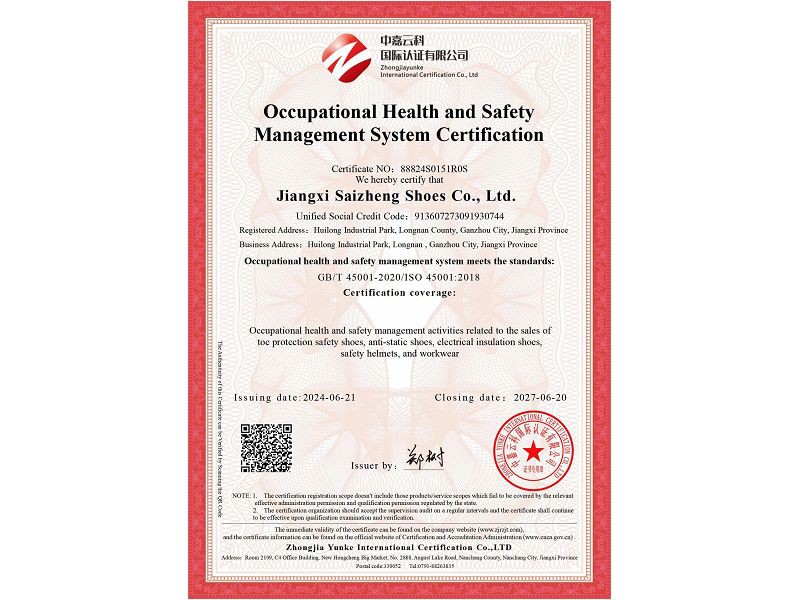
Our Certificate

FAQ
We're professional light work boots manufacturers and suppliers in China, specialized in providing high quality products and service. We warmly welcome you to wholesale high-grade light work boots made in China here from our factory.
blue light work boots, light work boots, black light work boots